Archive for the ‘How to Write More Betterly’ Category

Awesome Books For Awesome Authors: Story Engineering by Larry Brooks

/ August 12th, 2011 / No Comments »

Story Engineering Book CoverIf I’ve mastered anything about writing, it’s How To Put Off Writing By Reading More Books About Writing. And Larry Brooks latest work Story Engineering: Mastering the 6 Core Competencies of Successful Writing made me put all my writing on hold until I finished reading it.

Lots of writing books focus on a single aspect of the writing craft. Books on Character, Plot, and such abound. It’s rare books like Stein On Writing by Sol Stein, Story by Robert Mckee and Story Engineering by Larry Brooks that present a top-level perspective of many essential writing aspects at once and shows how they interrelate.

For those dying to know what the six core competencies are:

  • Concept
  • Character
  • Theme
  • Story Structure
  • Scene Execution
  • Writing Voice

There may be other elements of writing, but I doubt anyone will argue that these six are essential. Story Engineering not only explains each element in detail, but also takes examples from popular bestsellers, and shows you exactly how it’s done.

Tools, Not Rules

My only criticism of Story Engineering is that the useful information is slathered in a thick coating of the author’s opinion on how you should use these tools. He rails against the practice of organic writing (also known as ‘pantsing’) suggesting you must have your story structure in place before writing a word, or you’re signing your own rejection letter.

I’ve already thoroughly examined this topic in a previous blog post, Let the Muse Run Free or Tie Her Down? Organic Writing vs Outlining. The short version is that no one can or should tell you how to write. The six core competencies in Story Engineering are tools, not rules. They are descriptions of good writing, not prescriptions of ‘the way thou shalt write it.’  There is no question that an awareness of these core competencies will make you a better writer. But how you implement them (or knowingly break them) is up to you.

Despite the strong personal opinions, Story Engineering has plenty of excellent core content. Here’s how I recommend approaching the book to get the most out of it:

  1. Start by previewing Chapter 8 – The Development Process, which presents the top-level concept of a “Beat Sheet” and gives a method for organic writers to implement the six core competencies. Starting with this information will give you a context for the rest of the book. Reading chapter eight again when you get to the end of the book will really gel all the pieces together.
  2. Skip the first 18 pages. Or read them for what they are, an opinion. In fact, you can safely start at chapter five.
  3. If you’re the kind of writer who doesn’t outline, bring a lot of salt.

合計 (In Summation)

Story Engineering by Larry Brooks reverse-engineers the qualities of bestsellers, breaking down their structure into a generic template that can be used by anyone. Analyzing how stories break down beyond the classic three-part-story-structure is useful for any author, whether you are an outlining story-structuring guru, or a chase-the-muse style of writer.

The Six Core Competencies of Concept, Character, Theme, Story Structure, Scene Execution, and Writing Voice are explained as well as how they work together in besteslling books, making it a great reference for any author.  If you can master these six elements (no small task) your writing will find itself in good company.

You can read more helpful author advice (and opinions) at Larry Brooks’ website, storyfix.com.

Conrad Zero LogoYours Darkly,

Conrad Zero

Blog RSS Twitter Facebook MySpace

Let The Muse Run Free Or Tie Her Down? Organic Writing vs Outlining

/ August 4th, 2011 / 1 Comment »

Which Is Better, Outlining Or Organic Writing?

To outline, or not to outline, that is a fiction-writers battle as old as fiction-writing itself. Books on writing are as polarized about the subject as authors.

Julia Cameron pretty much paved the path of organic writing in her famous book, The Artist’s Way: A Spiritual Path to Higher Creativity. Although I don’t think she called the process “organic writing” she showed how anyone can channel their own creativity into writing without using an outline.

On the other hand, Larry Brooks latest book Story Engineering trounces on the process of organic writing, calling it “…nothing short of insane,” and stating that “A scene written organically – without a mission – is already being fitted for a casket.”

So who’s right? I’ve tried organic writing myself several times. One result was my first published short story, Big Game which sold on its first submission, and has reviewed quite well. Another result was a disasterous mess of dark fantasy pseudo-manuscript that shall not be named here, and made me wonder if Larry Brooks was right.

I did some research on plotting methods and the comparison of outlining vs organic writing. Here’s a look at the differences between these two methods and my answer to the question of which is better.

What is Organic Writing? (aka ‘Pantsing’)

Organic Writing is writing free-form, without plan or structure, and no real concern about where the writing is going. Check out free writing or automatic writing. The visual equivalent would be an artist doodling until they stumble upon an image. The musical equivalent would be ‘jamming’ in which a person or group simply plays until some musical structure jumps out of the ether and manifests into a song.

Some fiction writers use organic writing as a tool to flush out a scene, a character, or even a story.  They write to find out what their character is like, or where the story or scene leads. The author just… writes, letting a spontaneous flow of words rush through them. The author might be as surprised as anyone else about what hits the page. This is sometimes called discovery or exploratory writing.

I call this exploratory writing tactic “Chasing The Muse.” You let the muse out of the bottle and see where she goes. Sometimes she won’t move even if you prod her with a Tazer. That’s called writer’s block. Sometimes she plods along, (which is where this method also gets jokingly referred to as ‘plodding’ as opposed to ‘plotting’) feeding you a stream of words, and you write it all down.

If you’re lucky the muse runs, and it’s your job as an author to keep up. If it’s 2AM and you’re dead tired but you can’t stop because you’ve been possessed by the spirit of an amazing writer with words flowing faster than you can type them… congratulations, you’ve experienced true organic writing.

Some people call this “Pantsing” which is short for “Seat of the Pants Writing.”  Mr. T from The A-Team would call it being “On The Jazz.” Some people call it “insane” and begging for a rejection letter. Those opposed to organic writing suggest a different method – Outlining.

What is Outlining?

Outlining is the method of defining the structure of a story before writing any of it. The analogy is often made to building a house. Planning the structure down to the nearest sixteenth of an inch is crucial if you want to build the house with maximum efficiency and minimum waste.

Likewise with story construction, if you plan out how the story will start, end, and all the pieces between, then when you actually sit down to write the story, you know not only what goes where, but why.

There are various systems of outlining. Some people use notecards. Some use the Outline View in Microsoft Word. Some use the Snowflake Method software by Randy Ingermanson. Some just have the story structure in their head.

Regardless of how they do it, the primary difference between outliners and organic writers is that outliners write from A to B, and organic writers write from A.

Which writing method is better?

Which method is better? Let’s take a look at several different aspects of writing that can be affected:

Speed

In both methods, you will do lots of work up front on something that influences the final product but will not necessarily be part of it.

Outliners like to point out that much of the organic writer’s work will be edited or cut later. This is true. This is why organic writing is sometimes called “discovery writing” in which case you are discovering the outline.

But isn’t it also true that you’ll spend a lot of time on outlining? And once the outliner’s work is done, isn’t the organic writer thousands of words ahead?

It’s impossible to say which is a faster method for you. There are just too many variables. How fast do you outline? How fast do you write? How detailed an outline do you need before you start writing? You’ll have to answer these questions for yourself, probably by experimenting with both methods to see which is faster for you. And, as my own experience has shown, which method is faster could change on a project-by-project basis.

Quality

Which method results in the best quality writing? Outliners make a good case that your writing will flow better if you know where it’s going before you start. But some argue that outlining results in contrived writing and wooden characters, and organic writing begets more natural prose. I once heard someone remark that if the ending doesn’t surprise the author, it won’t surprise anyone else either.

Your mileage may vary. It’s impossible to say which method will result in better quality writing for you.

You see where this is going, don’t you?

Difficulty

Which method is more difficult? It might be more meaningful to consider which method is more fun. If the thought of outlining makes you feel as though you are strapping the muse into a straitjacket… if the constraints of getting from point A to point B give you writer’s block… if the thought of writing thousands of words that might be reworked for hours and/or thrown away makes you reach for the liquor cabinet…

Again, this is a subjective measurement that only you can make for yourself. It’s impossible to say which method will be easier or harder for you.

Really Zero, stop screwing around and tell us! Which method is better?

Sorry folks – after all that analysis, it turns out the whole thing is a trick question. In the logic field of Philosophy, this is what’s known as a False Dichotomy – focusing on two possibilities when there are actually others. In this case, the question of “Which Is Better?” implies that the two can’t both be used.

The truth is you can use both. The wicked truth is that you have to use both.

Structuring and Organic Writing are ingredients, and finding the best possible mix for you is like trying to find the right combination of Jagermeister and Red Bull in your penultimate, writing Jag Bomb.

Let’s take another look at both methods, and see what we missed.

Structuring, Revisited

The structural method sounds efficient on the surface. Once the structure is complete, you won’t waste many words filling that structure. Every word you put into that structure will be used to make the story go forward as it should. Very little rework, very little waste. Right?

Look again.

What exactly are you putting INTO that structure? Well, you know you have to get the scene from plot point A to plot point B, but when it finally comes time to fill that space, how do you do it? What do you fill it with?

That’s right, Organic Writing. At some point you have to stop drawing the outline and start filling it in.

And what happens if you fill that space as directed and when you’re done the scenes are flat? Boring? Contrived? What then? You rewrite.

But what if you rewrite those scenes a dozen times, and they still don’t sing? What if you find the structure is limiting your writing? You restructure.

What happens if your muse starts coloring outside the lines? What happens if your characters won’t behave? What happens if you find a plot hole big enough to sail an aircraft carrier through? What happens if you start writing from point A to point B and discover you’ve ended up at point C, by way of F, Y and the color Blue? What if point C is a far more interesting place than B?  Now what do you do?

If you want to keep point C in the story, you’ll have to revisit the structure and adjust everything! You’ll have to change all your foreshadowing, and maybe even the ending… oh boy. Maybe it’s better just to forget you ever discovered point C, get the train back on the structure track and rewrite your way to point B? Rewrite or restructure?

Not quite as easy as you thought, eh? Don’t be fooled. Good writing is hard work.

Organic Writing, Revisited

The organic writing method sounds pretty on the surface. Pretty easy too. So easy in fact, that many writers think they can shortcut the process by organically writing a bestseller out of the air.  Don’t be fooled. Good writing is hard work.

You’re going to throw away or rework a lot of that organic writing. You’ll need to go back and check that the plot flows, and the pacing and that all subplots resolve, and you’ll have to go back and check your foreshadowing and make sure all scenes are leading toward an ending you weren’t even aware of when you started…

Wait a minute! What exactly are you doing to that organic writing?

Surprise! You’re putting structure on it. Yes, you can structure your work after it’s written. And you’d better, unless you are journaling or writing poetry.

The Question, Revisited

Every author outlines, whether they do it intentionally, intuitively, subconsciously, naturally or artificially.

Every author writes organically, unless they are writing technical manuals for the military.

Those who outline have to fill their structures with organic writing. Those writing organically have to rework their organic writing to check/create/enforce a structure.

Without a structure, you don’t have a story, you have a dictionary run through a blender. Without organic writing you have a sterile description of a story.

The questions are not “which method is best?” or “should you outline?” The questions are “how do you outline?” and “how much outlining do you do?”

The Middle Path

Structure is a necessary component of ALL fiction, but whether you apply a structural outline before, after, or even during the creative writing process is not important. In other words, you should have a structure to your finished story, but how you get that outline is up to you. Some authors need to discover the story as they go. Some authors need an outline before they can start.

Between the two extremes are an entire purgatory of options that are overlooked by most authors. What if you organically wrote a story structure? What if you loosened up the story structure, and instead of putting the muse in a straitjacket, you got one of those dog leashes that allows some play before setting a boundary? What if you designed multiple ending structures and wrote each one organically to see which was best?

What works best for me is to bounce back and forth between organic writing and outlining. I write organically for a while, then take a step back to look at the big picture, and adjust the outline as necessary. Here is a link to a process called phase drafting which is very similar to what I’ve learned to do on my own. Yes, I rewrite a lot. No, it’s not easy. Need I say it again? Good writing is hard work.

The method that will work best for *you* is… whatever works best for you. If you want to improve your writing, read about organic writing in The Artist’s Way by Julia Cameron and read about story structure in Story Engineering by Larry Brooks. But don’t let Julia Cameron, Larry Brooks or even me tell you how to write. Learn the ingredients and then mix your own drink to taste.

Part of the adventure of becoming a writer is making the craft your own, and experimenting to find a method that feels good to you and helps you release your best writing.

Conrad Zero LogoYours Darkly,

Conrad Zero

Blog RSS Twitter Facebook MySpace


Reflections of 4th Street Fantasy Conversation 2011

/ June 28th, 2011 / No Comments »

A Convention for High-Level Author Discussion

The 4th Street Fantasy Convention Conversation describes itself this way:

  • a convention for people who are serious about good fantasy and good stories.
  • a weekend of high-quality, high-intensity, mind-stretching fun.
  • a single track program sized so that everyone can experience the same panels.
  • fascinating conversations.
  • an opportunity to promote interest and quality in fantasy literature.

I like that they call it a Conversation, not a Convention. The panel programming is structured like a Convention, but the audience is allowed to interact  add, and steer the conversation (under the control of a panel moderator). Some of the best conversation for me was found outside the actual programming, when writers would break into groups between panels, kibitzing in the back room, noshing at nearby venues, assembling in the hotel bar for some social lubrication, or taking over the conference room after hours for a late-night music jam.  The ability to digest and process the info with other authors is great because it allows you to take the high-level theory back to the day-to-day applied practice of writing.

Fourth Street is geared more toward art than craft. The level of discussion is more philosophical and abstract than the discussions we have at MNSpec Writer’s Groups. The topics are heady, and even panel topics that were started simply because “I didn’t like it when author X did this…” end up getting analyzed at a high level that might throw newer authors. With a roomful of experience, intelligence, alcohol and overcompensating introverts, your mileage will definitely vary. You could get moments of non-topic pedantic bullshit, but the results are usually writer-philosophy-Nirvana.

Who-All Was There

It was good to see a respectable turnout of my fellow MNSpec writers: the talented, published (and MODEST, damn him) Michael Merriam, his lovely wife Sherry Merriam, the uber-talented Dana Baird, the lovely and talented and very pregnant Abra Staffin-Wiebe, the cheerful uber-hipster couple Eli Effinger-Weintraub and Leora, and the charming Tracy LaChance. It was comforting to know that we could have taken the conference if we had to (except maybe Elizabeth Bear, she seems like a scrapper) but fortunately it didn’t come to that. It would be great if MNSpec could have an even greater presence at 4th Street in 2012. I was glad to have plenty of people I knew at the convention, because socializing is a major component of the event, and if you have people there whom you know, (or if you’re naturally outgoing and extroverted) I think you’ll get more out of it.

I was forewarned that there is a “country club” feel to the 4th Street convention, and I can tell you this is  is kinda-sorta true. A high percentage of people attending conference have been there before. I would say less than 10% of the group were first time attendees. Overall the regular crowd was friendly and accepting of The New People. There is also the core group that created 4th street called the Scribblies. These are the royalty in the not-so-invisible hierarchy of 4th Street. You don’t have to bow to them, but it’s clear that they run the show.

If the Scribblies are the Royal Court, then the Queen would be Janet Grouchy, the real power behind making 4th street a success. Janet is actually a Momma Duck in Disguise who made sure we were all taken care of over the long weekend. She was my personal caffeine source, keeping me supplied with Diet Coke and Louisiana Coffee for my high-octane needs. Janet was the epitome of Southern Hospitality. She checked on each table personally to make sure our lunches were alright before she sat down herself. Fourth Street is very lucky to have someone like Janet to coordinate this awesome event/resource for writers.

Highlights

Conrad Zero and Emma Bull

Conrad Zero and the Queen of Urban Fantasy, Emma Bull

The #1 highlight of the convention for me was when one of my personal hometown heroes Emma Bull sat down beside me, and we got the chance to chat. For those who don’t know, Emma Bull wrote War for the Oaks in 1987, which is considered to be the book that defined the Urban Fantasy genre, and had a huge impact on my own writing career. I told Emma that her work inspired me greatly, but that she should not feel responsible or guilty for any stories I might publish because of that inspiration. After three days of observing Emma in action, I can tell you she is smart, sparky, fun, and still passionate about writing after almost 25 years. She is living proof that writing will not eventually turn you into Harlan Ellison.

Another personal highlight was during a panel called “Off with ‘is head!” which discussed how, when and why authors might kill off main characters. One audience member was struggling to come up with an example of a character who become immortal, even mythological, by transcending death. I yelled out “Frodo Lives!” The guy looked equal parts confused and annoyed, like I had Tourette’s Syndrome or something. I could just as easily have yelled out “Jesus Christ!” but I figured more of the audience had read The Lord Of The Rings than The Bible. (I’m waiting for the movie myself.) But seriously, I didn’t just make up this phrase. If it has it’s own wikipedia page, it qualifies as pop culture. Good thing I had a +3 Potion of Snub-Resistance on me.

The “Another Panel” is complete genius. If anyone tries to take the discussion off-topic (intentionally or not) people can claim “That’s Another Panel” in which case someone writes it down on a board and the discussion returns to the topic at hand. At the end of the weekend, the last panel is called “Another Panel” where the list of topics is examined for further discussion.

There was so much book/author-name-dropping that it made me feel guilty for not reading more. The good news was that I was able to add a whole slew of fiction books to my amazon wish list. (Thank goodness for free wireless.) and a slew of movies to my Netflix queue. Uncle Hugo’s Science Fiction Bookstore had a handy table at the conference with an assortment of books by the authors in attendance.

The Lies of Locke LamoraI picked up a copy of The Lies of Locke Lamora by Scott Lynch, and got Scott to sign it. Scott is a great speaker with a great sense of humor and an odd combination of gregariousness and modesty. One of the discussion panel topics was about killing off main characters, which apparently happens in this book. Of course, I immediately had to buy it. Not because a main character dies, but I told Scott that any author willing to take chances like that is going to take chances in other areas too, and that’s the kind of author I want to read.

The best parts of 4th street for any author are information, motivation, and networking. Just talking about writing with writers, and bouncing around so many great ideas made me want to go home and write ten novels. If you’re a writer in the Minnesota/Minneapolis area, you owe it to yourself to attend the 4th Street Fantasy Conversation.

Things I learned at 4th Street Fantasy Conversation 2011

  • If you have a clean house, you are not an author.
  • If you aren’t a control freak, you aren’t really an author.
  • Weight gain in authors is also known as “street cred.”
  • Write better.
  • Write things you have a passion for.
  • Simply because you talk a good talk on a panel doesn’t mean your writing is good.
  • Simply because you botch or get trounced on a panel doesn’t mean your writing sucks.
  • You’re never going to keep your audience if you worry about keeping your audience.
  • The deadline for your Science Fiction manuscript is Fantasy, and the deadline for your Fantasy manuscript is Science Fiction (esp since it involves Time Travel.)

Conrad Zero LogoYours Darkly,

Conrad Zero

Blog RSS Twitter Facebook MySpace LinkedIn

5 Organizing Tips for Writers and Authors

/ May 9th, 2011 / No Comments »

Are you fighting a chaotic mess of manuscripts? A plethora of plot outlines? Reams of rejection letters? Do you lose documents and important info? Do you have enough paper on your desk to potty-train a herd of baby Godzillas?

You’re not alone.

I recently did some research on organization specifically for writers and authors, then I presented my findings to the MNSpec Writers Group. I’ll post a link to the podcast here when it goes live, but this blog post highlights five key points from that presentation.

One book that was very helpful in my research was Organizing for the Right Side of the Brain: A Creative Approach to Getting Organized by Lee Silber. According to Mr. Silber, writers, authors and other creative types have special needs when it comes to keeping organized.  Writers (especially Fiction writers) tend to be right-brain dominant, and right-brain dominant people are wired for creation, not organization. Their thinking is more abstract and intuitive than left-brain dominant people, whose thinking is more linear and analytical. You can read more about Left-Brain, Right-Brain Theory here, and you can take this test to see whether you are right or left brain dominant.

The most surprising discovery I made in my research was that I’m not as disorganized as I thought I was. It all started with this revelation:

Cleanliness Does Not Equal Organization

I used to believe that a clean desk was an organized desk, but on closer examination, I found that is not always the case. For instance, I work with someone whose office cubicle looks like it was ransacked by the FBI. It looks like the contents of every desk drawer were turned out onto her desktop. But she never loses things. She knows exactly where everything is. She can pull stuff out of the chaos like a magician. You wouldn’t know it by looking, but she is very organized.

Meanwhile, another coworker’s cubicle looks like it’s her first day on the job. Not a scrap of paper in sight. You literally could eat off the surface of her desk, it’s that clean. But she’s constantly asking me for copies of paperwork I gave her earlier. And when I ask her for paperwork, the usual response is, “Oh, I’m not sure where it is. I’ll have to dig for it. Let me get back to you.”

So there you are: Cleanliness does not equal Organization. If you “clean” your writing desk by shoving all those stacks of paper down the laundry chute, then your desk really is clean. But if you spend hours sifting through a mountain of paper in the basement, looking for manuscripts instead of writing, then you really are not organized.

So if organization isn’t cleanliness, what is it?

Redefining “Organization”

Bing.com suggests Organization is “effectiveness of arrangement” But we can do better than that. Try this:

Organization: The ability to find things in a reasonable amount of time.

The more organized you are, the faster you can find things when you need them. You either know EXACTLY where they are, or you know MOSTLY where they are, and can find them after a short search. Either way, if you are organized, then you don’t waste much time looking for things, whether these ‘things’ are contact information, appointments, character bios or that manuscript you haven’t worked on for months.

None of which has to do with cleanliness, which leads me to my first tip for writers and authors trying to get more organized:

Writer Organizing Tip #1 – Don’t Fear The Clutter

Authors, writers and other creative types are less limited by clutter than your average person. They are able to see patterns in chaos that would drive a left-brained person barking mad. Having things out where they can see them is a trait of right-brained folks who tend to believe that out of sight = out of mind. Where others see piles of paper on a desk, right-brainers are able to see a series of tasks they are working on: Manuscripts to revise, royalty checks to deposit, and rejection letters to burn to offset the heating bill.

So just because you have piles of paper on your desk doesn’t mean that you aren’t organized. Measure your organizing skills by how long it takes you to find things, or how often you lose things. Obviously its more pleasant to work in a clean work environment, but that’s a blog post for a different day. As long you are able to find what you need when you need it, don’t be afraid to have things out where you can see them.

Writer Organizing Tip #2 – Use Containers and Labels

The bad news is that being organized requires setting limits on the areas we have to search and flagging items so they can be easily found. The two tools that help us do this are containers and labels. These are also the core philosophies (and the core differences) in the way the Microsoft and Google approach organization.

Microsoft Windows was designed to be a digital desktop replacement. It has a desktop, and a series of containers just like your real office has file cabinets/drawers/file folders, etc.  So when you’re done with your manuscript, you file it under MyDocuments/Writing/Manuscripts/2011/RejectedByEveryone/Twice. Later when you go to look for it, you navigate through the containers to the folder “where it oughta be” and there it is.

Google approached organization in a different way. “If we can search through everything to find what we’re looking for really quickly,” they thought, “then why bother to separate things when we put them away? We’ll just tag things with labels to look for later and throw them all in a big pile!” Using this system, we search for [MyDocuments Writing Manuscripts 2011 RejectedByEveryone Twice] and there it is.

Regardless of which you prefer, Containers and Labels serve the same purpose: to help us find things later on. Unless you have a perfect memory, you will need these tools to be organized.

Containers and Labels sound like tools made by left-brainers for left-brainers, but here’s actually where creative people like writers and authors have an advantage. Creative people are able to see containers as an abstract thing instead of a bunch of boxes you buy from IKEA:

  • A calendar can be a container for appointments
  • Your cell phone can be a container for all your contact information
  • A room of your house can be a container for manuscripts
  • A computer can be a container for digital documents
  • A website you log into can be a container too.  For example, gmail.com is a container for e-mails.

In fact, you are already organized to some extent. Your manuscripts are already in a container called Planet Earth. It’s just going to take you a few thousand years to search it, but if that’s not an unreasonable amount of time, then congratulations! You’re organized.

For most of us, a few thousand years is about how long it’s going to take to hear back from our agent, and certainly an ‘unreasonable’ time, so we’ll need to narrow the boundaries on where our important documents are kept (container) and paint them bright orange (label)  so we can find them in a more reasonable amount of time.

Writer Organizing Tip #3 – Outsource the Search

Wouldn’t it be great if you had a house-elf (lets call him Dobby) that you could send to fetch your manuscripts, notes and character bios for you? Would you care what the filing system was? Would you care if Dobby had to run down a slippery circular staircase with only a torch for light and fight off a hungry dragon to get your manuscript that was filed underneath the cat’s sandbox?

Hells No! As long as Dobby was able to return it in a reasonable amount of time, you wouldn’t care. You’d just throw all your documents down the laundry chute and be done with it! The best part is that you would STILL be organized!

Well, if you are able to get your info into a digital format, you’re in luck. Because there are Dobbys all over the digital world. They’re called Search. Your operating system has a search feature to help you find files on your hard drive. I think every e-mail program has a built-in search feature, and if yours doesn’t then you need a new e-mail program. If you store stuff in EverNote, WordPress, Gmail, Google Docs, etc… then you have plenty of little Dobbys just waiting around to find things for you. Take advantage of them and let them do the search work for you.

Writer Organizing Tip #4 – Don’t put things where they belong. Put them where YOU will look for them

“I don’t believe it! There she goes again! She’s tidied up and I can’t find anything!”

-She Blinded Me With Science by Thomas Dolby

If that sounds familiar, then this tip will help you a lot: When you put something away, don’t automatically put it “where it goes.” Instead, put it where you will go to find it when you need it later on.

Would you store a cookbook in the kitchen? For left-brainers, sure. But for right-brained types, it might just as well be near your desk where you make the grocery list, or in the bookshelf with the other books, or on the nightstand because you like to read the chocolate fondue instructions aloud during intercourse. One of the authors from my writer’s group keeps her dental floss in the living room where it’s easily accessible while watching TV. A good rule of thumb is to put the thing near to where you will actually use it.

This goes for labeling too. When labeling things, make sure to use labels that you will look for later. For example, all the email fan letters I get from Suzanne Vega I tag with:

  • Fan Mail
  • Superstar
  • To be read aloud while making chocolate fondue

So when putting things away, don’t think about putting this thing away. Instead, think about looking for this thing later. That will help you determine how to label it and what container to put it in, which will help you to be more organized.

Writer Organizing Tip #5 – Three FREE Programs To Help You Get Organized

Evernote

Logo for EvernoteEvernote works great as a container for story ideas, outlines, research, marketing info, and much, much more.  Read this blog post about how Evernote rocks for authors.

Gmail

There are plenty of e-mail clients out there, but a Gmail account gets you a LOT more than just  e-mail:

  • Use Gmail contacts as a container for all your contact info.
  • Use the Gmail calendar to contain your schedule and appointments (Bonus Tip: Set up SMS messaging for important events. I do this for birthdays and appointments, and receive a text reminder on my cell phone.)
  • Use Google docs instead of Microsoft Word, Excel, and PowerPoint, then your documents are contained and organized for you.
  • Your Gmail account also gives you access to Picassa, Google’s online picture organizing software
  • Google Reader makes a great container for RSS feeds and podcasts
  • Of course, all of these services come with labeling and search features to help you get and stay organized

SugarSync

SugarSync LogoThere are many free file-backup software services: SugarSync, Dropbox, Mozy and more. But any of them can act as a container for your important documents, manuscripts, photos and other data files. Read my review of SugarSync vs Dropbox for all the reasons why you want this FREE software.

Rejoice

Does this mean you can just throw all your manuscripts, notes, and character bios into a single folder (or a single program like EverNote) and call yourself organized? Does this mean you can have stacks of paper on your desk and still call yourself organized?

Hells Yes. As long as you can find things in a reasonable amount of time, you no longer have to feel guilty calling yourself an organized writer.

So rejoice all you authors, writers and right-brained friends! Putting together a system of organization is easier than you think. It’s keeping things IN the system that’s a challenge. It requires willpower and motivation, which are topics for another day.

If you have any useful organizing tips for writers/authors, drop them in the comments section.

Conrad Zero LogoYours Darkly,

Blog RSS Twitter Facebook MySpace

Author Branding, Part 2 – Image

/ May 4th, 2011 / 1 Comment »

Using Image as an Author Branding Tool

This article is part 2 in a series on author branding.

Many authors confuse Brand with Image. This is easy to do, since image is a large part of any author’s brand. But there’s more to brand than simply image, and I’ll discuss more aspects of authors’ brands over the course of this series.  But Image is a large part of your brand, and you do have lots of choices and influence regarding your image.

There are hundreds of fluffy definitions of ‘image’ as it relates to brand on the web. I don’t like any of them, so I’ll add one more:

Image is a compilation of sensory perceptions of a product/person/business.

Don’t think just in terms of visual perception, because blind people create an image of you, too. It’s the way you look, crossed with the way you sound/smell/act and the colors of your website, the thickness of paper you use in your novel, crossed with ten-thousand tiny details (some of them subconscious) that people put together in their mind when they see/hear/smell you, your website, your products and your interactions with others. All that data is compiled into a group of adjective-labels. Shady. Smart. Cool. Dark. Slick. Feisty. Bitchy. Masculine. Stinky.

Aspects of Your Brand Image

Here’s a list of aspects that have a major affect on your brand image:

YOU

The #1 aspect of your image is… yourself. How you personally look, dress, and act will trump any brand image people put together from other sources. How’s your personal hygiene? How’s your posture? How about your sense of humor? Are you always scowling or smiling? Do you laugh like hyena,  swear like a sailor, dress like Kurt Cobain, and drink like an author of dark fiction?

Your image choices should align with your true qualities. If your true qualities don’t mesh with the image you try to present…well, the words fake and poser come to mind.

There’s little harm in accentuating the positive and minimizing the negative, but be careful. If you’re writing a book on eating healthy and someone posts a picture of you on flickr.com eating a dozen Krispy Kreme doughnuts… or if you’re writing a book on being Green and Earth-friendly, then a pic of you turns up riding around in a Cadillac Escalade… no one will trust a word you write. Your image is shot, and so is your brand. So focus on your good traits and minimize the bad, but never, ever lie. The internet sees all and knows all.

Color, Fonts and Graphics

This goes for not only your websites and book covers, but printed materials like business cards (you do have business cards, right?) Choose a color scheme and fonts, then apply them across all your print materials and websites where you can. If you have a series of books, make sure they look like they belong together on the shelf.

Be picky about the pictures and graphics on your website. Are your backgrounds filled with cheerleaders playing beer-pong? You might want to get outside opinions from people who are not only objective, but aren’t afraid to be honest with you.  It’s easy to go overboard with graphics and colors.  If you think it might be too much, then it definitely is.

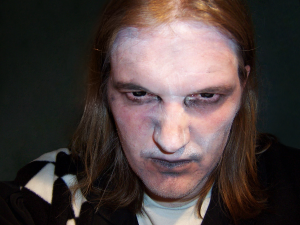
The Face Of Conrad Zero - Part Mark of Zorro and part Empty Set Indicator

Logos

Companies and publishers have logos. I think it’s only fair that authors do too.

For my own website, I use a logo instead of a picture. This goes against the conventional wisdom of the marketing pundits who swear that you need a picture of your face on all your social media sites. Puh-lease. I honestly have no idea what Dean Koontz, Dan Brown, Stephanie Meyer, James Patterson or J.K. Rowling look like. Nor do I care. Besides, I get enough marriage proposals and death threats without everyone recognizing me in public.

But I have no problem pasting a logo all over the place. And I can put it in places I wouldn’t dare put a picture. It works as my avatar for all social media and in my signature for blog posts and e-mails, it works great on print media, websites, and tagging overpasses. Seriously,ever try tagging an overpass with your picture?

How To Get The Most Brand Image Bang For Your Buck

Here are the top areas I see author’s image either impress or depress me. If you want to work on your author image, start with these items:

Author Bios

Your author bios on the web are probably your most important image asset. Note the plural; bios. Not just the About page on your website. There are lots of little author bio pages scattered across the social media. Facebook, Myspace, Google, Twitter, they all have an ‘about me’ section, and this is where you have an opportunity to help define your image. If you don’t have a fascinating and well-written (you’re a writer, right? It better be well-written) description of yourself, a stunning picture, and a link back to your home base… You just wasted that opportunity.

Book Covers

Like hell you can’t judge a book by its cover. I do. In fact, I wrote a blog post about how to judge a book by its cover.  It might be true that good book covers are not indicators of good quality writing, but bad book covers are almost always used to wrap bad writing. And if you have a series of book covers, anyone glancing at them all at once is going to put together an image of you and your writing very quickly. Make sure that image fits with the image you are trying to convey.

Your Home Base

I love the part in movies where the hero finds the villain’s lair, and they’re not at home, but all their stuff is. Their master plans of world destruction lie spread out on the coffee table. Newspaper articles and terrifying sketches are tacked up on the walls. The hero drinks it all in, trying to figure out what makes the bad guy tick. Check out the movie Se7en if you don’t know what I’m talking about.

When people visit your primary online web presence, they are doing the exact same thing. They are piecing together YOUR IMAGE based on your pictures, website colors, fonts, graphics, web copy, and anything else they can get their eyes on. Do you have music playing on your website? (Here’s a hint: *don’t*) If you do, that music gets added to the compiled brand image.  Is your home base a facebook, myspace or livejournal account? Or is it a slick, flash-animated website using your own domain name? Is it Shiny? Grungy? Techy? Green? Modern? Faded? Whatever it is, your audience adds it to their image of you.

Home is where you point your links.

If you don’t have a home base, pick one. Then tweak it. Customize it. Trick it out, so it represents the image you want to be known for. Funnel all your traffic there, and make it a place people can figure out what makes you tick.

E-mail Signature

Another overlooked place where authors can impress people with their brand image savvy. Check out the wisestamp plugin for firefox, which lets you drop a preformatted signature into e-mails, blog posts, and forums.

Your Personal Interactions

Sorry introverts, but here’s where many authors drop the ball. They create a stunning online presence, and then you meet them at a book signing or convention and they have a personality like a day-old dead fish, and a handshake like a fish that’s been dead for three days. Which leads me to my next point:

Your Image Should Reflect Your Work

This should go without saying, but far too often I’m surprised (in a bad way) by authors’ pictures or websites.

Twilight Book Cover

See this book cover? ITS BEEN DONE! So don't use it.

I wish I could remember the horror novel I saw that had an author picture of a geeky uber-nerd, hanging out in a sunny garden with a greasy comb-over and a cheesy grin that made me laugh out loud.

Epic Image Fail.

You don’t have to wear a cloak and scowl in a graveyard at midnight, but if you’re a horror author, you probably wanna look like a horror author. Especially on your own book and website.

If your book cover has a pair of disembodied hands offering something to the reader… I’m going to write off your story as a yet-another poor quality fanfic knockoff of Stephanie Meyer’s Twilight.

And if you aren’t clever enough to come up with a book cover that doesn’t have fangs, a neck bite, a three-quarter twist, or a bloody hand print on it… then I’ll just assume your writing is equally unimaginative.

Image Consistency

It’s a good idea to keep your image consistent across all media. Ideally, your social media pictures, graphics, colors, and fonts should be the same, or at least look like they belong together. Consider social media sites to be extensions or branch offices of your main website. Sometimes this isn’t possible on crap websites run by draconian overlords like Facebook.com. But if you look at my twitter, myspace and author website, you’ll see that I’ve tried to get them all to match in color, graphics and layout as much as I can, to keep a consistent brand image.

There’s More To Brand Than Just Image

While it’s tempting (and gratifying) to sit around and tweak on website colors and fonts, and get a snazzy picture of you wearing your favorite cloak and scowling in a graveyard at midnight, that isn’t all the audience will consider when they piece together your author’s brand. So check out the other posts in this series on author branding, and make sure your audience gets the whole picture.

The Author Branding Series

This is the first in a series of blog posts about the different elements of author branding. In the rest of the series, I’ll give examples of how myself and others use them, and how you can use them to create a brand for yourself as an author.

  1. An Introduction To Author Branding
  2. Image
  3. Genre
  4. Quality, Cost, Speed and Consistency
  5. Content, Keywords and Tone
  6. The Company You Keep

Conrad Zero LogoYours Darkly,

Blog RSS Twitter Facebook MySpace

Author Branding, Part 1 – An Introduction To Author Branding

/ May 2nd, 2011 / 1 Comment »

The “B” Word

This article is part 1 in a series on author branding.

If you read many books or blog posts about how to succeed as an author, you’ll eventually run into what Randy Ingermanson calls “The B Word” in his Advanced Fiction Writing Newsletter.

That word is Branding, something formerly associated with pressing red-hot metal against cattle’s hindquarters, but branding has evolved into a marketing tool now associated with large companies like Apple, Nike, Coca-Cola and such.  Branding doesn’t just apply to companies anymore. Products and even individuals can have brands too.

You don’t really have full control over your brand, but you do have influence. There are tons of books and websites out there that can help you discover and establish your own brand. But it isn’t rocket science. This series of blog posts will outline aspects, benefits and tactics of branding that you can use to improve your career as an author.

What Is A Brand?

Brand has been defined in many ways:

Seriously. Why not just leave the title off, then his name wouldn't be so squished?

In essence, brand is how people label you, an important trait for authors to have. Authors already have the built-in labels provided by Genre, but Brand is much more than just where your books can be found in the library.  Randy Ingermanson calls it “The set of expectations the reader has when they see your name on the cover.”

Stephen King is a brand. You have a good idea what you’re getting when you buy a book that says Stephen King on the cover. Many people will buy a book simply because it has Stephen King’s name on the cover. Publishers know this. On the cover of the book, The Dark Half, Stephen King’s name is actually larger than the title of the book!

Authors who break their established branding can get into trouble with their audience. For example, Anne Rice readers were dismayed by her drastic changes in stance on fan fiction and religion.

Brand Or Be Branded

Many indie authors evolve into a brand, just letting their brand happen over time. This is like trying to grow a garden by simply not mowing your yard. And it’s going to look awfully similar to everyone else who did the same thing. Your brand shouldn’t just reflect you and your writing, it should highlight what is special about you and your writing. It shouldn’t just place you within a genre, it should make you stand out within it. There’s plenty of room for you next to Stephen King in the Horror genre, but if your brand looks, feels and smells exactly like Stephen King… why would people buy your book when they can get Stephen King, a brand they already know and trust?

It isn’t hard to come up with a unique brand that fits your writing style. You might do this if you are planning to self-publish, or if you think it might be an attractive selling point for a publisher. All other things being equal, an author with a clear brand in place might be more attractive to a publisher than an author who simply lets their brand grow wild.

Publishers know how important author branding is, and if they sign an author, they will create a brand for them if they don’t already have one. Some publishers are a brand themselves. For example, the Dummies series of books by Wiley are a brand, and authors who write for them all get assimilated into that brand. They all have the same characteristics, cover, layout, etc.

Publishers brand authors according to a market niche where their books are likely to sell best. They can also brand authors INTO a market, whether their writing fits or not. I call this False Branding.

False Branding

Molly Hatchet Album Cover

An example of false branding. Warning: Contents are not remotely as cool as you think.

Letting the market (or the publisher) push you into a brand can make your sales skyrocket. It can also make your sales tank. More than one Horror or Urban Fantasy author has been pushed into the Paranormal Romance genre because it’s the latest Red Hot Genre. More than one entrepreneur has tried to come across as a professional [fill in the blank] to cash in on the Next Big Thing. But what if that brand is not really representative of their work?

Readers aren’t stupid. Just because you wrote a book on a subject doesn’t mean you know what you’re talking about. Just because two werewolves fuck in your story doesn’t make your novel a Paranormal Romance. Try it and reviewers will slay you, your book, and your future sales. Your author brand needs to accurately reflect your work.

Take Molly Hatchet for example. One look at a Molly Hatchet album cover and you think you’re getting some kind of Epic, Apocalyptic, Doom Metal, but listen to it, and you get a watered down version of Lynyrd Skynyrd. Completely false branding. (More accurately, a false image. I’ll explain the image portion of brand later in this series.)

There’s plenty of authors out there who could be known as The Molly Hatchet of Authors, by releasing books with cover art, cover copy, endorsements and blurbs that make a promise to readers that the writing can’t back up. Like the wise man said in Sucker Punch, “Don’t ever write a check with your mouth that you can’t cash with your ass.”

You, Branded

So how to you take your own brand by the horns and define a workable brand for yourself?

  • Learn about branding- Learn what you can and cannot control. Read about branding and . See below for links to the rest of this series on author branding to learn more.
  • Analyze the branding of other authors – Research other authors, both in your genre and not, and see how they are using the different aspects of branding.  What works? What doesn’t? What are they doing well? How are they doing it? What are they lacking?
  • Research the market – Look at what others are doing in aggregate within your genre. What parts of the branding are expected for your genre and what parts are assumed? Are you seeing a lot of copycat branding? Is there a place for you to fit into the genre, yet stand out from the crowd?
  • Research yourself – Put on your publishers glasses or your audience glasses and examine yourself from their point of view. Look at your writing, graphics, website, blog posts, social media, comments, and photos and see where your brand is right now.
  • Decide on your own author brand – How do YOU want to be perceived as an author? Who is your audience and what do they want in an author? What makes YOU and your writing different from other authors?
  • Adjust your brand accordingly – Emphasize the aspects of branding that fit the brand you want to portray and minimize or cut whatever does not fit the brand you want.

The Author Brand Series

This is the first in a series of blog posts about the different elements of author branding. In the rest of the series, I’ll give examples of how myself and others use them, and how you can use them to create a brand for yourself as an author.

  1. An Introduction To Author Branding
  2. Image
  3. Genre
  4. Quality, Cost, Speed and Consistency
  5. Content, Keywords and Tone
  6. The Company You Keep

Conrad Zero LogoYours Darkly,

Blog RSS Twitter Facebook MySpace

Great Software for Great Authors – Evernote

/ January 20th, 2011 / 2 Comments »

Outsource your memory to the cloud with Evernote

There’s a reason I’ve listed Evernote on my 2008, 2009 and 2010 Free Software Christmas Lists.  Imagine if you could hook up a hard drive to your brain to remember anything that can be put into text, picture or file formats: Drawings, screen captures, e-mails, notes, doodles, webpages, pdfs, mp3s, etc. Now imagine being able to effortlessly sort and search through that information database to find what you need when you need it. Such a thing does exist, and it’s called Evernote.

“Remember Everything” is the mantra of Evernote. You don’t have to have a poor memory to realize how useful an information database is. If you have notebooks full of ideas and sketches, or a binder full of research notes and printouts, or even your class notes from Fiction Writing 101, store them to Evernote. Then, the only thing you’ll ever need to remember is your username and password for evernote.com.

Cool Features of Evernote

You can work offline with Evernote’s local client, which automatically synchronizes itself across the internet to any of your connected devices, meaning you are always backed up. Conflicts in data syncs are marked, making conflict resolution painless.

You can access your Evernote info no matter where you are. Evernote has Mobile Apps for droid, iphone and other mobile devices, and Application Plugins for Firefox, Internet Explorer, Outlook, and even windows file explorer.  I use the Firefox plugin all the time. When I make an online purchase or a new account that gives me some kind of receipt, or account info, I don’t print it out. Press the Save To Evernote button and bam, it’s remembered.

Evernote comes with a great screen capture tool that runs in the system tray. A couple clicks, and that cryptic windows error message is saved forever instead of printing it out and losing it.

Organize your notes using folders and tags – Saving all that data up to the cloud does you no good if you can’t find anything when you need it. Evernote has nameable folders to sort your info, and tags that you can use to label and find your data in different ways, and a shiny, built-in search feature. Tags and folders automatically show up on the side of the screen for easy navigation.

Text Recognition is a cool feature.  Upload a screenshot or picture and Evernote translates any legible text in the picture so you can search for it! For example, take a picture of the ultimate White Russian recipe, upload it to Evernote, then do a search for Vodka and… whammo! There’s your picture, found in the search results!

More more more. Integrated to-do list. Sharing and collaboration. Import and Export features. I could keep going, and I haven’t even gotten to the best part yet:

FREE!

The very best feature of Evernote is that it’s Free. The free version limits the amount of data you can up/download in a month to 60MB, but unless you are taking lots of pix and syncing constantly to multiple devices, you won’t even have to worry about it. The free version also has a tiny ad space in the bottom left, but it isn’t the least bit obtrusive. A yearly subscription to Evernote is currently $45.

The nearest competition to Evernote is Microsoft’s OneNote which will set you back $79.99. OneNote is a great program, I used it for years before switching to Evernote. I switched because of the massive list of features above, but there are several reasons to use Evernote over OneNote:

  1. Evernote saves to the cloud, meaning you’re always backed up
  2. Load Evernote on multiple devices, and sync between those devices automagically.
  3. Evernote is free.

The paid version of Evernote gets rid of the advertisements, ups the bandwidth to 1GB per month, and lots more. Check out the difference between the free and paid Evernote  versions here.

Why Evernote Rocks for Authors

Evernote is useful for anyone dealing with information: engineers, students, project managers, etc, but it’s absolutely essential for authors. Here’s just a handful of ways I use Evernote to keep my writing organized.

Story ideas

Ever come up with some great idea that you might work on someday? Ever wake up from a horrific nightmare and decide that it would make a bone-chilling scene in a story? I drop these thoughts into Evernote if a computer is handy, or in a notebook, and transfer them to Evernote later for safe keeping under the handy folder heading ‘Ideas/Musings’.

If I’m ever stuck for something to write,  I can look through the slew of bizarre story ideas I’ve had over the years.

Story outlining and structure

I used to keep my story outlines in separate word documents, but now I keep them in Evernote. I have a main project folder for each novel, story or series I’m working on. In that master folder I put notes for characters, research, locations and outlines. For example, every story I write has a note with a full outline of the story or series.

While writing my novel in MS Word, I run Evernote in the background or on a second monitor for quick and easy info lookups. Having the outline of the story handy keeps me focused. Especially when writing a series of stories, it helps to see how the story I’m working on fits into the larger picture.

Character Development

I save a note for each major character in each of my stories. It’s like a CIA dossier on that character’s height, weight, eye color, hair color, likes and dislikes, personality, etc. I’ve even added descriptions from sources such as the Myers-Briggs personality types, astrological signs or tarot cards that remind me of the characters. I often clip pictures from the internet that remind me of a character and store them in the note.

Now I can easily look up details about any character. Check out my notes for the character Cayenne (from my upcoming novel Evil Looks Good) on my Evernote shared folder.

Writing Research

Writers often end up doing some of the strangest research. What are the benefits/drawbacks to using cold-forged steel blades? What is the layout of the ruins at Chichen Itza? What is the Sunday Mass schedule for the Minneapolis Basilica?

Finding this data isn’t always easy. Remembering it all is impossible. I save useful info in Evernote, tagged in groups like: characters, events, locations, gadgets and plotlines.

One example of my own writing research is a drug I invented for my novel, Evil Looks Good called Yellow King. I used a hybrid of online research and creativity to determine characteristics, effects, side effects, antidotes and results of overdose. Now, if I ever forget this info, I can just look it up in Evernote. You can see the results here at my shared Evernote folder.

Market Research

Do you know what market you’re writing for? Who is your competition? What books are going to be on the shelf next to yours at the library? What’s their cover price? How many copies have they sold? How many pages do they have? What trends are saturating the market? What books won the Horror Writer’s Association’s Bram Stoker Award last year?

It might seem like trivia, but if you’re a serious writer (or publisher, or both) then you need this information. You need a list of books like yours. You need to be aware of what you’re writing and how it fits into the upcoming market. Evernote is a great place to drop all this market research and sift through it later, to help you target your book with or without a publisher’s help.

Submissions and Publications

How many places did I send that manuscript? How long ago was it? When should I follow up? Dump all those names, dates and places into Evernote, and track your submissions/acceptances/rejections in one place.

Using Evernote to save this info, you’ll know when to hit up your agent for a status update, when you can resubmit your manuscript to that magazine contest, and when publication rights fall back to you.

Paper Love

I love writing on paper. And I do my most creative work writing symbols, maps, flowcharts, sketches and scribbles using pens made from dead dinosaurs on paper made from dead trees. And I can’t do that kind of creative freehand on the computer. But there’s no organization to a mountain of spiral notebooks. So while I was interested in Evernote for organizing, I had to integrate it into a useful system that included paper. Fortunately, using Evernote does not mean you need to give up on paper entirely.

Now I still keep notebooks handy in my car/pocket/bedside, and I’ll often carry paper with me to the coffee shop instead of a damned laptop. I write, draw and sketch story ideas on paper. Later, I scan or translate the info from paper into Evernote, placing it in the proper folder and adding tags for later lookup. You can file the paper copy away if you like, but I toss it once the data is safe in Evernote.

Separating the creative aspect of writing using paper and then the analytical/organizational aspect of storing the data on Evernote has made me more efficient about what I’m doing. Best of all, I’m never in fear of losing my creative moments via theft or fire or simply misplacing one of my notebooks. For me, this is the best reason for authors to use Evernote.

The Great Software For Great Authors Series

As both an I.T. guy and a writer, I get exposed to many different computer programs that are useful not only to computer users, but authors in particular.  So I created the Great Software for Great Authors series, where I discuss software that can help authors in their quest to be more organized, efficient and successful.

So here’s the disclaimer. I’ve used all the software listed in this series, and found it useful enough to give it a hearty recommendation for my fellow authors, as well as the Conrad Zero Ubercool Seal of Approval. I’m not related in any way to the software companies I endorse, and they have not paid me for my recommendation. There may be affiliate links in this blog post and website which provide a token fee to me if people buy the software after clicking through from my links, but this is my recommendation only and not an advertisement.

I love to hear from other authors. If you agree/disagree with my opinion or have an alternative recommendations, please post them in the comments section.

Conrad Zero LogoYours Darkly,

Conrad Zero

Blog RSS Twitter Facebook MySpace

How YOU can become a Great Author

/ December 7th, 2010 / 1 Comment »

You Can’t.

Sorry. You probably came here looking for Tips and Tools. Instead, you found a disturbing Truth:

You can’t become a Great Author.

Before you get angry, you should know that the truth is worse than you think:

No one can become a Great Author.

Now you can get angry.

You’re probably saying that this is not true, and you can rattle off a dozen examples by the last name alone: King, Tolkien, Lovecraft, Gaiman, Rowling, Meyer… People who painted vivid pictures and epic sagas and amazing characters with only some words on a page.

I wanted to become a Great Author, and I read dozens of books that tell you how.  I read books that promise your manuscript can be the gold the interns lust after as they sludge through the slush pile into the thin morning hours.

But it’s all lies.

Avoid Passive Writing, one would say. Watch Your Point of View, says another. Make your protagonist human. Make your villains hateable. Write as much as you can. Write every day. Vary your sentence length. The secret is in the revision. Three-part story structure. Show , don’t tell. Be transparent. Work on your voice…

Lies. None of this will make you a Great Author.

I read the blogs of authors who actually made the book deal.  I read about when they write, and how they write, why they write, and what music they listen to while they write. I read about authors who don’t like their own stories, begrudging cranking out contractually-obligated manuscripts. I read about authors with a successful series of published books behind them and a multi-book contract ahead of them, they still need to hold down a second job, and thank goodness their spouse has a full-time job with medical insurance. They stuff their blogs with handy tips about how you can be a Great Author just like them.

Lies.

I read dark fiction / fantasy books like my own, trying to figure out what makes them good and what makes them suck. I dissected classics like a coroner stumbling through an alien autopsy while drunk and blindfolded, trying to tell one piece from another by touch, taste and smell. All I have left to show are a stack of books I really can’t read anymore.  Like my friend who let me look up her skirt on the school bus,  and now I’ll never see her in the same way again.

Lies.

I could walk over to the bargain bin at Half-Price Books and pick out at least one book neither of us have ever heard of, but it’s better than most of the current rack of Bestsellers at Borders.

Lies.

The Truth about Great Authors

Some of you already see through the veil of deception. It’s semantics. A word-game. The truth is that you can’t CHOOSE to become a Great Author, any more than you can choose to become a Lottery Winner.

This is summed up nicely in a simple illustration from The Art of War for Writers by David Scott Bell. At the bottom are those who dream and dabble. Naturally, the size of each section decreases as you go up the author’s career ladder. At the “top” are those who have several published works beneath their belts. But these authors aren’t necessarily “Great” and in fact, they might not even be “Good” but regardless they made it to the “top.” Their reward is not an Automatic Bestseller as you might think. Instead, they get a chance on the wheel.

Illustration of the author's career path from James Scott Bell's The Art of War For Writers

The Wheel Of Fortune

Great Authors are not picked off the street, they are picked off the top half of the pyramid in David Scott Bell’s illustration. Every single story you complete, every novel you publish, is an entry in the Author’s Wheel of Fortune. Every published work gets put Out There for the public to judge. Every one of them has the opportunity to become the next Bestseller.

But most of them are destined for the Bargain Bin. Thanks for playing, but we have some lovely parting gifts for you.

Why is this Good News for Writers?

You might think this is all very pessimistic. Intellectual Poison spread to dissuade others from even trying. Actually, I think it’s liberating. Sure, you don’t get to choose whether you win, but you can choose if you want to play.

Your novel has a shot at bestseller status just like James Rollins does. Think about that. Once you realize that you really only control your author career to a certain point, then you can focus on what matters -building a body of solid works. Consistent. Quality. A Platform. A Reputation.

Tipping the Scales

Yes, there are those who want to figure out how the wheel works. They spend endless time, money and effort trying to cheat the system, but here is all you really need to know:

  1. Keep Publishing.
  2. Get Better.

The more you play, the better your odds. The better your entries, the better your odds. These two tips combined have an exponential effect on your odds of becoming a Great Author. If you have lots of entries, each better than the last… do the math. That’s better odds than spending time and money on a viral video campaign for a crappy knockoff of Twilight that hasn’t been professionally edited.

In Summation:

I guess I lied. There is one way that you can become a Great Author:

Write.

Conrad Zero LogoYours Darkly,

Conrad Zero

Blog RSS Twitter Facebook MySpace

How Authors Can Hold Awesome Events

/ December 6th, 2010 / 2 Comments »

Tips To Make Any Event More Professional

It’s awesome that there’s enough of a community to pull together themed fashion shows here in Minneapolis and St. Paul.  So far we have Music, Vampire, Zombie, and now Steampunk fashion shows. Most of them are very well done and professional. Some are not.

One show in particular left me disappointed. Truth is, I’d hesitate to call it even semi-professional. And that’s a shame, because with just a tiny bit of consideration and a few keystrokes, it could have been on a par with professional events like Voltage: Fashion Amplified.

I see authors who make the same mistakes and come across as unprofessional with their book readings, signings and other public events. This article suggests simple ways to make any event look and feel more professional. It doesn’t pertain to authors only; any event can be made more professional by implementing these suggestions.

Sharing

One way authors act unprofessional and amateurish is when they are overly-protective of their work.  I once met a guy who said he was writing a book, but wouldn’t tell me what it was about. A person in my writer’s group marked on the rough draft he submitted for an editing critique that it was copyrighted. Seriously.

Events can exhibit the same unprofessional behavior on a larger scale. The steampunk fashion show I attended announced that absolutely no one was to take pictures, and anyone so much as exposing a camera would be roughed up. Meanwhile, there were hordes of “approved” people (Read: friends) running videocameras and snapping pix throughout the show.

Contrast that behavior with Voltage Fashion Amplified, a music/fashion show run by local fashion maven, Anna Lee. Cameras are encouraged. Anna knows that even crappy pix from your cellphone are free publicity. Every single person who takes pix of that event, posts the pix online, and reviews the event on their blogs are contributing to the promotion of the event. Why would you limit free publicity?

I suspect that people who are overprotective of their work are simply afraid that someone else will do it better. If that is your fear, then you shouldn’t release your work to the public. Ever. In any shape or form. Just keep in in your closet until you die, then someone else can get rich off it. (Or more likely, throw it away.)

Give First, Sell Second.

  • Having something on hand to sell is nice, but not necessary.
  • Having something on hand to give away is necessary.

Most people get this backwards, and treat their event like a Pampered Chef party. “Come to my book reading so you can buy my book!” does not entice anyone but your mother to show up. Tell people what’s in it for them, not what’s in it for you.  Free is the keyword. If your event doesn’t cost anything, say so. Prizes and giveaways are a good incentive. You don’t have to give away gold bricks or vials of unicorn tears. Bookmarks, posters or a drawing for a free (signed) copy of your book will work and they don’t cost much.

If you’re charging admission, you better have something pretty stellar to show. People want a lot for their money.

Recently, Prince held a concert and a “free” copy of his latest CD was included in the ticket price. We know better. The price of admission was raised to offset the cost of the CD and his album sales skyrocketed. Someone put a stop to that behavior, and good thing, because it wasn’t fair to those who already owned the CD. But nothing says authors can’t do something similar, like having the book available right at the door and offer a discount if purchased at the same time as the event cover.

Get a Quality MC

The Master of Ceremonies is the personification of your event – arguably as important than the talent. A hack MC can make even a good event look like its run by hacks. There’s more to being a good MC than just being comfortable in front of an audience, and it’s more than just filling empty space with witty banter.

An example of a great event MC is local hero Bobby Marsden, who runs the Fearless Filmmakers events. Bobby knows how to keep things moving along. He can direct a group of people on stage as easily as he can direct the attention of the audience, all while maintaining a sense of humor. Bobby Marsden knows how to control the event. And when he doesn’t, he knows how to maintain appearance of control over the event.  Things go wrong. The next act isn’t ready. The projector is broken. The microphone is cutting out. I’ve seen Bobby deal with all this in style, and most of the time, the audience doesn’t even realize something is wrong.

If the MC doesn’t have control, the audience will try to ‘help.’ NOTHING makes your show look like it was put on by a bunch of fanboyz than a bunch of fanboyz who hijack the show from an inept MC.

Be careful when your MC is also appearing in the show as an act. You might argue that the Oscars, Saturday Night Live and the Teen Choice Awards have announcers and presenters whom also take part in the show. The difference is that they are famous.  If you can get Lady Gaga to MC your show, then by all means have her on as a musical guest too. Having your cousin Tim act as MC is fine, but when he shows up later as a musical guest, it looks cheap.

Don’t Hide Your Event

It should be obvious, but if you want people to find your event, posting fliers all over town is optional. Posting the event info online is not. And I don’t mean  just the Date, Time and Place. People need to know if there is a cover charge, how long will the event last, and if there are age limitations. Most importantly, if the content of your event isn’t obvious from the title then you need to give a description of the event, ideally one that entices people to go.

It’s not good enough to list the event info on your blog. No one reads your blog. I know, because no one reads mine either. You need to put the info where people will go looking for it.

  • Start with the venue website.
  • Local media – Here in Minneapolis, the must-haves are vita.mn and city pages.com, but don’t overlook the MN Daily website, the Rake, Metromix.com and others.
  • Specialty websites for your type of event. For example Dark Twin Cities.com loves to list local events with some dark flair. Jambase and Eventful list music events.
  • If you didn’t think of social media like facebook, myspace and twitter, et al. then you should have someone else promote your events for you.
  • Fine, go ahead and put it on your blog too. It’ll make you feel better.

You’re probably laughing right now. “Zero, have you been smoking grickle-grass with the Lorax? Everybody knows you have to list your events online!”

Um, actually, they don’t. When searching online for the steampunk fashion show, all I could find was an abstract event name which had more to do with porn stars than steampunk fashion. I ended up getting a tiny bit of info from one of the fashion designers for the show, and I totally took a chance even going. Most people would have given up. Actually, most people would never have found out in the first place. Perhaps the people holding the event didn’t want others to attend? Was it pseudo-members-only? That’s the feeling I got, which brings me to my next point.

Don’t Exclude your Audience

Add up the above suggestions and you’ll arrive at a larger truth about events. Be inclusive. Not exclusive. Cliques are for kids. No one’s going to have good things to say about your event if they feel snubbed. In fact, they’ll probably write a blog post just like this one.

If you’re a first-time visitor to Goth Prom, Renn Fest, Voltage: Fashion Amplified, the Zombie Pub Crawl, and other artistic events in the Minneapolis area, you’ll be welcomed, hit on, and have fake blood puked on you like everyone else. That’s the kind of experience that makes you want to not only come back again next year, but invite more people.

Planning

I shouldn’t have to say this, but have a schedule. Stick to it as close as you can, but be prepared to be flexible when things go wrong.

Team Up

OK, maybe you aren’t a big deal. Maybe the only crowd you can draw is your mother, and that’s because you live with her and will be driving her to the event yourself. If so, you might consider adding to the talent pool. A little cross-promotion can go a long way. Get your author friends involved and make a bigger event out of it. Get local vendors involved. God forbid if you can make the event big enough you might get some sponsors interested.

Summary

Is there anything wrong with a writer booking a venue and ignoring these thoughtful tips? Of course not. As long as they’re happy with just their friends showing up. In which case, they’d be money ahead to hold the event in their parents garage, then they can have full control of the event and keep all the money for themselves instead of splitting it with the venue.

But if you want to run a pro event that will grow over time, you have to include your audience. Make sure they know how fun and value-added your event is. Have a schedule and make sure your MC can manage the crowd in case things go wrong. Make your event findable online. These things separate the pros from a bunch of kids screwing around.

Did I miss anything? Any other event-behaviors that irk you or make the event less-than-professional? Share your thoughts in the comments below.

Conrad Zero LogoYours Darkly,

Conrad Zero

Blog RSS Twitter Facebook MySpace

How Bigfoot’s ‘Three-Quarter Twist’ pose changed the book cover industry

/ January 6th, 2010 / 1 Comment »
Cover of Laurell Hamilton's 'Obsidian Butterfly'

Front Cover Showing The Back Side...

A leisurely stroll through the fiction section of your local bookstore will reveal a surprising number of book covers that are… ass.

Literally.

Primarily female ass.

I’m going to be the very, very, very last person in the world to complain if people want to put any portion of the female anatomy on book covers.  So blame my Inner Philosopher for asking “Why?”

The simple answer is that ‘sex sells.’ But for the sake of a blog post, I’m going to pretend there’s more to it than that.

It’s important to realize that the author doesn’t always have input on the cover of his/her own book. The cover is generally the domain of the publisher if the author is traditionally published (as opposed to self-published) . That includes the book title, cover copy, graphics, colors, layout, font, blurbs, etc. Covers of books are usually developed or contracted by the publisher.

But that doesn’t really explain this:

kimharrisonbookcovers

Kim Harrison Book Covers

For the record, Kim Harrison did not start this trend, and she might not like it herself, but her publisher is clearly sold on it. Now, any one of these as a cover is fine. But as a repeated motif it’s questionable, and as a genre, I’d think someone somewhere would find it offensive. More than half of these covers don’t even show the woman’s head, and none of them show the face. What happened to women being pissed off at being objectified? If a male author had book covers like these, could we expect some outcry then?

No offense intended to Kim Harrison; quite the opposite. I think there is more substance to her books than than the covers give credit for. Check online reviews of her work and see for yourself. You will find that her writing is well-liked and her covers are not. In fact, I would say her work is selling well *in spite of* her publisher’s cover choices.

Attack of the Clones

For every person with an original marketing idea, there’s 1×10^3 people who simply copy that idea, rendering it un-original. My guess is that once upon a time, a good book with the female behind on the cover made the bestseller list, and now publisher’s marketing departments are making the decision to knock off a piece.

Why would I think this? Browse through the fiction section yourself and look for the books with the heroine derriere on the cover. They won’t be hard to find. This bunch came together quickly:

Karen Chance Book Covers = Ass

Karen Chance Book Covers

Carrie Vaughn Book Covers = Ass

Carrie Vaughn Book Covers

Richelle Mead Book Covers = Ass

Richelle Mead Book Covers

Again, I have nothing whatsoever against the authors or their writing. In fact, that’s my point. How do the publishers’ cover choices relate to the contents? Are the covers an accurate image of the product, or simply objectifying women? Should marketing people should be strangled to death with their own intestines?

If I were the author, I’d be pissed that my book cover looked like this. No originality whatsoever. Drowned in a sea of “Look at my ass too!”.

Branding

Origin of the famous "Three Quarter Twist" pose.

Origin of the famous "Three Quarter Twist" pose.

Of course we all recognize the classic pose of looking back over the shoulder originated by Bigfoot. (See picture, right.) My friend James has named this pose The “Three-Quarter Twist”  – not looking all the way behind you, but almost. Xtna pointed out that this pose allows the audience to see three aspects of the subject – the face, the curve of the chest, and the ass – all at once.

One could argue that showing the female backside on a book cover is a branding thing, like the Harlequin Romance ‘bodice rippers’ with the stereotypical picture of Fabio ravaging some harlot on the cover. Perhaps publishers think that consumers can put themselves in the place of the heroine on the cover. This would explain the disturbingly faceless/headless heroines. Maybe they think consumers see the cover pic of a heroine’s ass and think, “Oh, look! A modern day urban-fantasy featuring a female-dhampir protagonist, and told from first person point of view! I love these!”

What it tells me is that the author doesn’t have an original idea, and this book is just a knockoff of all the other books in the genre. Or worse, this book is trying to *look* like other books in a desperate attempt to sucker people into buying it. But keep in mind:

…the author doesn’t always have input on the cover of his/her own book… The cover is generally the domain of the publisher.

So the cover doesn’t have as much to do with the contents as you would think.

The Ass End

I should be thankful. Things could be worse. Much worse. They could be pictures of guys’ asses, or flabby bellies. Rob Zombie could probably think up far worse pictures of female anatomy to offend us.

The covers don’t lie. These books do in fact, contain female heroines, and the female heroines do in fact, have backsides. But what does this say about the publisher’s approach to the customer and the market as a whole? What does this say about the originality of the author/story?

What do you think?

Conrad Zero LogoYours Darkly,

Blog RSS Twitter Facebook MySpace

Page 1 of 212»